Short-Term Rentals & Rules:
Can You Airbnb Your Cottage?
With platforms like Airbnb and VRBO, many cottage owners are tempted to offset expenses by renting out their property when they’re not using it. Short-term rentals can generate income, but they also come with rules, responsibilities, and risks that every buyer should understand before listing their cottage.
This guide explores local restrictions, insurance considerations, and how short-term rentals may impact both your property and the broader cottage market.
⸻
Can You Airbnb Your Cottage?
The short answer: it depends.
Short-term rental rules vary by municipality and lake community. Some areas welcome rentals, while others impose restrictions - or ban them altogether. Before buying with rental income in mind, it’s critical to research the rules for your specific property.
What to Check
Zoning & Bylaws: Some municipalities only allow rentals in designated zones.
Permits & Licensing: Many towns require rental operators to register or obtain a license.
Occupancy Limits: Caps on the number of guests or vehicles are common.
Noise & Parking Rules: Many areas have bylaws targeting noise, fireworks, and late-night parties.
⸻
Insurance Considerations
Standard cottage insurance is designed for personal use - not commercial rentals. Listing your property without disclosing it to your insurer could leave you uncovered in the event of damage or liability.
What to Ask Your Insurer
Do they cover short-term rentals, or is a special policy required?
Are there limits on the number of rental nights per year?
What liability protection is included if a renter is injured?
Costs
Expect to pay $500–$1,500 more per year for a policy that includes short-term rental coverage.
⸻
Market Impact
Short-term rentals can be a double-edged sword. On the one hand, they can help offset costs like taxes, utilities, and maintenance. On the other, they may affect your relationship with neighbours and the long-term value of your property.
Potential Benefits
Generates additional income.
Makes ownership more affordable for part-time users.
Popular on lakes near tourist towns or major highways.
Potential Drawbacks
Strained neighbour relations if guests are noisy or disrespectful.
Wear and tear on your cottage, dock, and septic system.
Possible future restrictions if communities push back against rentals.
⸻
Common Buyer Concerns
“Will I be allowed to rent?” → Only if local bylaws permit it - always confirm before purchasing.
“Will rentals affect resale value?” → Properties with proven rental income can attract investors, but heavy rental history may concern buyers seeking a quieter retreat.
“Is the income worth it?” → Factor in cleaning, management, insurance, and wear-and-tear costs before counting on rental profits.
⸻
Key Questions to Ask Before You Buy
Does this municipality allow short-term rentals?
Is a license or permit required, and what is the annual fee?
Are there guest or vehicle limits in place?
Will my insurance cover rentals, or do I need an upgraded policy?
Are neighbours or the lake association supportive of short-term rentals in this area?
⸻
Red Flags to Watch For
Properties marketed as “great rental potential” without proof of compliance.
Municipalities actively debating or tightening rental restrictions.
Sellers unable to provide income history or expense breakdowns.
Insurance policies that specifically exclude short-term rentals.
⸻
Conclusion
Short-term rentals can be a smart way to make cottage ownership more affordable - but only if you understand the rules and protect yourself with proper insurance.
Before assuming you can Airbnb your cottage, research the local bylaws, speak with your insurer, and weigh the potential benefits against the risks. With the right planning, short-term rentals can be a valuable tool - but going in blind could turn your dream retreat into a costly headache.
Thinking of Hosting?
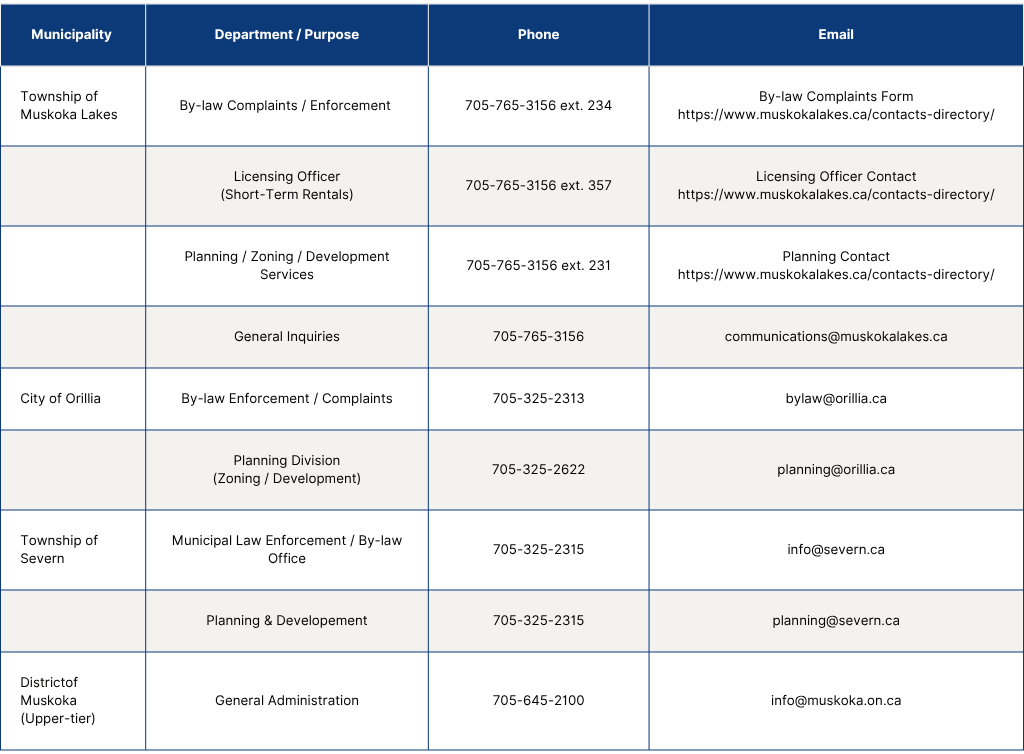
📞 Municipal Contacts for Short-Term Rental Rules
⚠️ Disclaimer:
Municipal contacts, phone numbers, and email addresses may change over time. Always confirm the latest information directly with the municipality before making decisions related to short-term rentals.
More Resources for Waterfront Buyers
Discover all our guides, crafted to help cottage buyers learn about essential topics — click below to explore more.


Discover the top 10 things every buyer should know before purchasing a waterfront cottage.


Learn how to finance a cottage or waterfront property and what makes these mortgages different from city homes.
Learn the essentials of septic systems and wells before buying your waterfront cottage.
🏡 Free Waterfront Buyer Checklist
Buying on the water? Get your free checklist - it walks you through shoreline features, lot privacy, water systems, and key red flags to watch for.
We respect your privacy. Unsubscribe anytime. •Includes occasional tips on local listings & lakes.